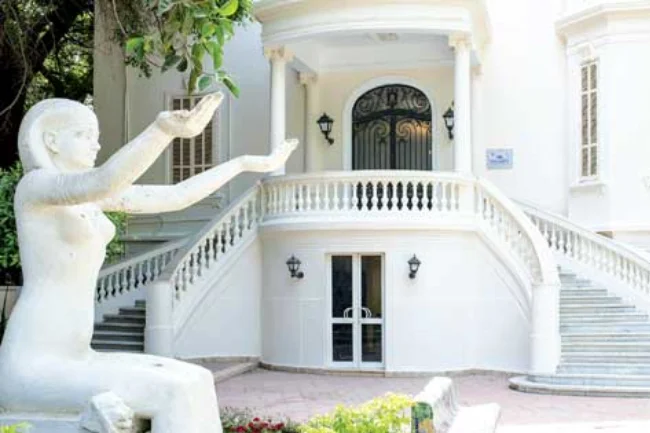
The Egyptian economist Ahmed Aboud Pasha could not have known that the luxurious classical palace he built for his daughter, "Mona," at the beginning of the last century would become his true gateway into history. Located on Zamalek Island, the palace became part of the Faculty of Fine Arts following the July Revolution and became widely known as the "Aboud Building."
Today, the Faculty celebrates its 108th anniversary, which coincides with the reopening of the palace after its transformation into a Museum of Fine Arts.
The museum houses a collection of significant acquisitions. The formation of this collection began in the 1980s during the deanship of the late artist Salah Abdel Karim. Some of the paintings and sculptures were graduation projects of students who later became pioneers of the Egyptian fine arts movement. Notably, some of these pieces were acquired for symbolic sums not exceeding 20 Egyptian pounds at the time, whereas their value today is estimated in the millions. The collection boasts works by great artists, most notably Ragheb Ayad, Abdel Hadi Al-Gazzar, Hamed Nada, Nehemiah Saad, Hussein Bikar, and others from various generations. The museum was brought to light through the dedicated efforts of professors and students led by Safia El-Kabbani, Dean of the Faculty, bringing the Aboud Palace back to life and revealing many of its secrets and memories.